Germany
The general questions with answers
300 questions in the order of the official catalogue: the English translation, the German original and the right answer. The questions about your federal state are below.
No account needed. Full access · €7.99 — 180 days of access for one payment — it never renews
Aufgabe 1
In Germany, people may openly speak out against the government because …Correct answer:freedom of expression applies here.
In Deutschland dürfen Menschen offen etwas gegen die Regierung sagen, weil … — hier Meinungsfreiheit gilt.
Aufgabe 2
In Germany, until their child is 14 years old, parents can decide whether the child takes part at school in …Correct answer:religious education lessons.
In Deutschland können Eltern bis zum 14. Lebensjahr ihres Kindes entscheiden, ob es in der Schule am … — Religionsunterricht teilnimmt.
Aufgabe 3
Germany is a state under the rule of law (Rechtsstaat). What does this mean?Correct answer:All residents and the state must obey the laws.
Deutschland ist ein Rechtsstaat. Was ist damit gemeint? — Alle Einwohnerinnen/Einwohner und der Staat müssen sich an die Gesetze halten.
Aufgabe 4
Which right is one of the fundamental rights in Germany?Correct answer:freedom of expression (Meinungsfreiheit)
Welches Recht gehört zu den Grundrechten in Deutschland? — Meinungsfreiheit
Aufgabe 5
Elections in Germany are free. What does this mean?Correct answer:Voters may neither be influenced nor forced to vote in a particular way, and they must not suffer any disadvantage because of the election.
Wahlen in Deutschland sind frei. Was bedeutet das? — Die Wählerin/der Wähler darf bei der Wahl weder beeinflusst noch zu einer bestimmten Stimmabgabe gezwungen werden und keine Nachteile durch die Wahl haben.
Aufgabe 6
What is the German constitution called?Correct answer:Basic Law (Grundgesetz)
Wie heißt die deutsche Verfassung? — Grundgesetz
Aufgabe 7
Which right is one of the fundamental rights guaranteed by the German constitution? The right to …Correct answer:freedom of faith and conscience
Welches Recht gehört zu den Grundrechten, die nach der deutschen Verfassung garantiert werden? Das Recht auf … — Glaubens- und Gewissensfreiheit
Aufgabe 8
What is not in the German Basic Law (Grundgesetz)?Correct answer:Everyone should have the same amount of money.
Was steht nicht im Grundgesetz von Deutschland? — Alle sollen gleich viel Geld haben.
Aufgabe 9
Which fundamental right applies in Germany only to foreigners? The fundamental right to …Correct answer:asylum
Welches Grundrecht gilt in Deutschland nur für Ausländerinnen/Ausländer? Das Grundrecht auf … — Asyl
Aufgabe 10
What is compatible with the German Basic Law (Grundgesetz)?Correct answer:a fine
Was ist mit dem deutschen Grundgesetz vereinbar? — die Geldstrafe
Aufgabe 11
What is the constitution of the Federal Republic of Germany called?Correct answer:Basic Law (Grundgesetz)
Wie wird die Verfassung der Bundesrepublik Deutschland genannt? — Grundgesetz
Aufgabe 12
A party in the German Federal Parliament (Bundestag) wants to abolish freedom of the press. Is that possible?Correct answer:No, because freedom of the press is a fundamental right. It cannot be abolished.
Eine Partei im Deutschen Bundestag will die Pressefreiheit abschaffen. Ist das möglich? — Nein, denn die Pressefreiheit ist ein Grundrecht. Sie kann nicht abgeschafft werden.
Aufgabe 13
In parliament, the term “opposition” means …Correct answer:all members of parliament who do not belong to the governing party/parties.
Im Parlament steht der Begriff "Opposition" für … — alle Abgeordneten, die nicht zu der Regierungspartei/den Regierungsparteien gehören.
Aufgabe 14
Freedom of expression in Germany means that I …Correct answer:can express my opinion on the internet.
Meinungsfreiheit in Deutschland heißt, dass ich … — meine Meinung im Internet äußern kann.
Aufgabe 15
What does the German Basic Law (Grundgesetz) forbid?Correct answer:forced labour
Was verbietet das deutsche Grundgesetz? — Zwangsarbeit
Aufgabe 16
When is freedom of expression restricted in Germany?Correct answer:when false claims about individual people are spread publicly
Wann ist die Meinungsfreiheit in Deutschland eingeschränkt? — bei der öffentlichen Verbreitung falscher Behauptungen über einzelne Personen
Aufgabe 17
German laws forbid …Correct answer:unequal treatment of citizens by the state.
Die deutschen Gesetze verbieten … — Ungleichbehandlung der Bürgerinnen und Bürger durch den Staat.
Aufgabe 18
Which fundamental right is guaranteed in Article 1 of the Basic Law (Grundgesetz) of the Federal Republic of Germany?Correct answer:the inviolability of human dignity
Welches Grundrecht ist in Artikel 1 des Grundgesetzes der Bundesrepublik Deutschland garantiert? — die Unantastbarkeit der Menschenwürde
Aufgabe 19
What is meant by the right to “freedom of movement” (Freizügigkeit) in Germany?Correct answer:You may choose for yourself where you live.
Was versteht man unter dem Recht der "Freizügigkeit" in Deutschland? — Man darf sich seinen Wohnort selbst aussuchen.
Aufgabe 20
A party in Germany aims to set up a dictatorship. It is then …Correct answer:unconstitutional.
Eine Partei in Deutschland verfolgt das Ziel, eine Diktatur zu errichten. Sie ist dann … — verfassungswidrig.
Aufgabe 21
Which is the coat of arms of the Federal Republic of Germany?Correct answer:Picture 1
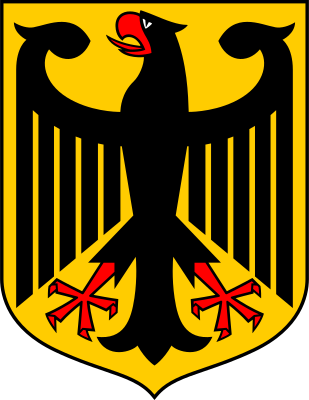
Welches ist das Wappen der Bundesrepublik Deutschland? — Bild 1
Aufgabe 22
What form of state does Germany have?Correct answer:republic
Was für eine Staatsform hat Deutschland? — Republik
Aufgabe 23
In Germany, most people in work are …Correct answer:employed by a company or a public authority.
In Deutschland sind die meisten Erwerbstätigen … — bei einer Firma oder Behörde beschäftigt.
Aufgabe 24
How many federal states (Bundesländer) does the Federal Republic of Germany have?Correct answer:16
Wie viele Bundesländer hat die Bundesrepublik Deutschland? — 16
Aufgabe 25
Which of these is not a federal state of the Federal Republic of Germany?Correct answer:Elsass-Lothringen
Was ist kein Bundesland der Bundesrepublik Deutschland? — Elsass-Lothringen
Aufgabe 26
Germany is …Correct answer:a democratic and social federal state.
Deutschland ist … — ein demokratischer und sozialer Bundesstaat.
Aufgabe 27
Aufgabe 28
Who elects the members of the Federal Parliament (Bundestag) in Germany?Correct answer:the people who are entitled to vote
Wer wählt in Deutschland die Abgeordneten zum Bundestag? — das wahlberechtigte Volk
Aufgabe 29
Which animal is on the coat of arms of the Federal Republic of Germany?Correct answer:eagle
Welches Tier ist das Wappentier der Bundesrepublik Deutschland? — Adler
Aufgabe 30
What is not a feature of our democracy?Correct answer:press censorship
Was ist kein Merkmal unserer Demokratie? — Pressezensur
Aufgabe 31
In Germany, when parties work together to form a government, this is called …Correct answer:a coalition.
Die Zusammenarbeit von Parteien zur Bildung einer Regierung nennt man in Deutschland … — Koalition.
Aufgabe 32
Which of these is not a branch of state power in Germany?Correct answer:the press
Was ist keine staatliche Gewalt in Deutschland? — Presse
Aufgabe 33
Which statement is correct? In Germany …Correct answer:the state and religious communities are separate from each other.
Welche Aussage ist richtig? In Deutschland … — sind Staat und Religionsgemeinschaften voneinander getrennt.
Aufgabe 34
Aufgabe 35
How does the German state finance social insurance?Correct answer:with social security contributions
Womit finanziert der deutsche Staat die Sozialversicherung? — Sozialabgaben
Aufgabe 36
Which measure creates social security in Germany?Correct answer:health insurance
Welche Maßnahme schafft in Deutschland soziale Sicherheit? — die Krankenversicherung
Aufgabe 37
What are the heads of government of most federal states in Germany called?Correct answer:Minister-President (Ministerpräsidentin/Ministerpräsident)
Wie werden die Regierungschefinnen/Regierungschefs der meisten Bundesländer in Deutschland genannt? — Ministerpräsidentin/Ministerpräsident
Aufgabe 38
The Federal Republic of Germany is a democratic and social …Correct answer:federal state (Bundesstaat).
Die Bundesrepublik Deutschland ist ein demokratischer und sozialer … — Bundesstaat.
Aufgabe 39
What does every German federal state have?Correct answer:its own government
Was hat jedes deutsche Bundesland? — eine eigene Regierung
Aufgabe 40
With which words does the German national anthem begin?Correct answer:Einigkeit und Recht und Freiheit … (Unity and justice and freedom …)
Mit welchen Worten beginnt die deutsche Nationalhymne? — Einigkeit und Recht und Freiheit …
Aufgabe 41
Why is there more than one party in a democracy?Correct answer:because this way the different opinions of the citizens are represented
Warum gibt es in einer Demokratie mehr als eine Partei? — weil dadurch die unterschiedlichen Meinungen der Bürgerinnen und Bürger vertreten werden
Aufgabe 42
Who passes a new law in Germany?Correct answer:the parliament
Wer beschließt in Deutschland ein neues Gesetz? — das Parlament
Aufgabe 43
When can a party be banned in Germany?Correct answer:if it fights against the constitution
Wann kann in Deutschland eine Partei verboten werden? — wenn sie gegen die Verfassung kämpft
Aufgabe 44
As a citizen in Germany, whom can you not elect directly?Correct answer:the Federal President (Bundespräsidentin/Bundespräsident)
Wen kann man als Bürgerin/ Bürger in Deutschland nicht direkt wählen? — Die Bundespräsidentin/den Bundespräsidenten
Aufgabe 45
Which kind of insurance does long-term care insurance (Pflegeversicherung) belong to?Correct answer:social insurance
Zu welcher Versicherung gehört die Pflegeversicherung? — Sozialversicherung
Aufgabe 46
The German state has many tasks. Which task is one of them?Correct answer:It builds roads and schools.
Der deutsche Staat hat viele Aufgaben. Welche Aufgabe gehört dazu? — Er baut Straßen und Schulen.
Aufgabe 47
The German state has many tasks. Which task is not one of them?Correct answer:It pays for holidays for all its citizens.
Der deutsche Staat hat viele Aufgaben. Welche Aufgabe gehört nicht dazu? — Er bezahlt für alle Staatsangehörigen Urlaubsreisen.
Aufgabe 48
Which body is not one of Germany's constitutional bodies?Correct answer:the citizens' assembly (Bürgerversammlung)
Welches Organ gehört nicht zu den Verfassungsorganen Deutschlands? — die Bürgerversammlung
Aufgabe 49
Who decides school policy in Germany?Correct answer:the federal states
Wer bestimmt in Deutschland die Schulpolitik? — die Bundesländer
Aufgabe 50
The economic system in Germany is called …Correct answer:social market economy.
Die Wirtschaftsform in Deutschland nennt man … — soziale Marktwirtschaft.
Aufgabe 51
It is not part of a democratic state under the rule of law that …Correct answer:people are arrested by a private police force for no reason.
Zu einem demokratischen Rechtsstaat gehört es nicht, dass … — Menschen von einer Privatpolizei ohne Grund verhaftet werden.
Aufgabe 52
What does “sovereignty of the people” (Volkssouveränität) mean? All state authority comes from …Correct answer:the people.
Was bedeutet "Volkssouveränität"? Alle Staatsgewalt geht vom ... — Volke aus.
Aufgabe 53
What does “Rechtsstaat” (rule of law) mean in Germany?Correct answer:The state must obey the laws.
Was bedeutet "Rechtsstaat" in Deutschland? — Der Staat muss die Gesetze einhalten.
Aufgabe 54
Which of these is not a branch of state power in Germany?Correct answer:the directive (Direktive)
Was ist keine staatliche Gewalt in Deutschland? — Direktive
Aufgabe 55
What does this picture show?Correct answer:the seat of the Bundestag in Berlin
Was zeigt dieses Bild? — den Bundestagssitz in Berlin
Aufgabe 56
Which office in Germany is part of the municipal administration?Correct answer:public order office (Ordnungsamt)
Welches Amt gehört in Deutschland zur Gemeindeverwaltung? — Ordnungsamt
Aufgabe 57
Who is usually elected President of the German Federal Parliament (Bundestag)?Correct answer:a member of the largest parliamentary group
Wer wird meistens zur Präsidentin/zum Präsidenten des Deutschen Bundestages gewählt? — eine Abgeordnete/ein Abgeordneter der stärksten Fraktion
Aufgabe 58
Who appoints the ministers of the federal government in Germany?Correct answer:the Federal President (Bundespräsidentin/Bundespräsident)
Wer ernennt in Deutschland die Ministerinnen/die Minister der Bundesregierung? — die Bundespräsidentin/der Bundespräsident
Aufgabe 59
How many years ago was there a Jewish community on the territory of present-day Germany for the first time?Correct answer:about 1,700 years ago
Vor wie vielen Jahren gab es erstmals eine jüdische Gemeinde auf dem Gebiet des heutigen Deutschlands? — vor etwa 1700 Jahren
Aufgabe 60
In Germany, the Federal Parliament (Bundestag) and the Federal Council (Bundesrat) belong to the …Correct answer:legislature (Legislative).
In Deutschland gehören der Bundestag und der Bundesrat zur … — Legislative.
Aufgabe 61
What does “sovereignty of the people” (Volkssouveränität) mean?Correct answer:State authority comes from the people.
Was bedeutet "Volkssouveränität"? — Die Staatsgewalt geht vom Volke aus.
Aufgabe 62
When the parliament of a German federal state is elected, this is called …Correct answer:a state election (Landtagswahl)
Wenn das Parlament eines deutschen Bundeslandes gewählt wird, nennt man das … — Landtagswahl
Aufgabe 63
What does not belong to the executive (Exekutive) in Germany?Correct answer:the courts
Was gehört in Deutschland nicht zur Exekutive? — die Gerichte
Aufgabe 64
Today the Federal Republic of Germany is divided into …Correct answer:the federation, the states and the local authorities.
Die Bundesrepublik Deutschland ist heute gegliedert in … — Bund, Länder und Kommunen.
Aufgabe 65
It is not one of the tasks of the German Federal Parliament (Bundestag) to …Correct answer:form the federal cabinet.
Es gehört nicht zu den Aufgaben des Deutschen Bundestages, … — das Bundeskabinett zu bilden.
Aufgabe 66
Which cities have the largest Jewish communities in Germany?Correct answer:Berlin and München
Welche Städte haben die größten jüdischen Gemeinden in Deutschland? — Berlin und München
Aufgabe 67
What is mainly a task of the federal states in Germany?Correct answer:school policy
Was ist in Deutschland vor allem eine Aufgabe der Bundesländer? — Schulpolitik
Aufgabe 68
Why does the state control the school system in Germany?Correct answer:because this is its task under the Basic Law
Warum kontrolliert der Staat in Deutschland das Schulwesen? — weil es nach dem Grundgesetz seine Aufgabe ist
Aufgabe 69
The Federal Republic of Germany has a three-level administrative structure. What is the lowest political level called?Correct answer:municipalities (Gemeinden)
Die Bundesrepublik Deutschland hat einen dreistufigen Verwaltungsaufbau. Wie heißt die unterste politische Stufe? — Gemeinden
Aufgabe 70
Federal President Gustav Heinemann hands Helmut Schmidt his certificate of appointment as German Federal Chancellor in 1974. Which of these is one of the duties of the German Federal President?Correct answer:He/she proposes the Chancellor for election.
Der deutsche Bundespräsident Gustav Heinemann gibt Helmut Schmidt 1974 die Ernennungsurkunde zum deutschen Bundeskanzler. Was gehört zu den Aufgaben der deutschen Bundespräsidentin/des deutschen Bundespräsidenten? — Sie/Er schlägt die Kanzlerin/den Kanzler zur Wahl vor.
Aufgabe 71
Where does the German Federal Chancellor spend most of their time? He/she is most often …Correct answer:in Berlin, because the Federal Chancellery and the Bundestag are there.
Wo hält sich die deutsche Bundeskanzlerin/der deutsche Bundeskanzler am häufigsten auf? Am häufigsten ist sie/er … — in Berlin, weil sich dort das Bundeskanzleramt und der Bundestag befinden.
Aufgabe 72
What is the name of the current Federal Chancellor of Germany?Correct answer:Friedrich Merz
Wie heißt die jetzige Bundeskanzlerin/der jetzige Bundeskanzler von Deutschland? — Friedrich Merz
Aufgabe 73
The two largest parliamentary groups in the German Federal Parliament (Bundestag) are currently …Correct answer:CDU/CSU and AfD.
Die beiden größten Fraktionen im Deutschen Bundestag heißen zurzeit … — CDU/CSU und AfD.
Aufgabe 74
What is the parliament for the whole of Germany called?Correct answer:Bundestag (Federal Diet)
Wie heißt das Parlament für ganz Deutschland? — Bundestag
Aufgabe 75
What is the name of Germany's current head of state?Correct answer:Frank-Walter Steinmeier
Wie heißt Deutschlands heutiges Staatsoberhaupt? — Frank-Walter Steinmeier
Aufgabe 76
What does the abbreviation CDU stand for in Germany?Correct answer:Christlich Demokratische Union (Christian Democratic Union)
Was bedeutet die Abkürzung CDU in Deutschland? — Christlich Demokratische Union
Aufgabe 77
Aufgabe 78
What does the abbreviation SPD stand for?Correct answer:Sozialdemokratische Partei Deutschlands (Social Democratic Party of Germany)
Was bedeutet die Abkürzung SPD? — Sozialdemokratische Partei Deutschlands
Aufgabe 79
What does the abbreviation FDP stand for in Germany?Correct answer:Freie Demokratische Partei (Free Democratic Party)
Was bedeutet die Abkürzung FDP in Deutschland? — Freie Demokratische Partei
Aufgabe 80
Which court in Germany is responsible for interpreting the Basic Law (Grundgesetz)?Correct answer:Federal Constitutional Court (Bundesverfassungsgericht)
Welches Gericht in Deutschland ist zuständig für die Auslegung des Grundgesetzes? — Bundesverfassungsgericht
Aufgabe 81
Who elects the Federal Chancellor in Germany?Correct answer:the Federal Parliament (Bundestag)
Wer wählt die Bundeskanzlerin/den Bundeskanzler in Deutschland? — der Bundestag
Aufgabe 82
Who leads the German federal cabinet?Correct answer:the Federal Chancellor (Bundeskanzlerin/Bundeskanzler)
Wer leitet das deutsche Bundeskabinett? — die Bundeskanzlerin/der Bundeskanzler
Aufgabe 83
Who elects the German Federal Chancellor?Correct answer:the Federal Parliament (Bundestag)
Wer wählt die deutsche Bundeskanzlerin/den deutschen Bundeskanzler? — der Bundestag
Aufgabe 84
What is the main task of the German Federal President? He/she …Correct answer:represents the country.
Welche Hauptaufgabe hat die deutsche Bundespräsidentin/der deutsche Bundespräsident? Sie/Er … — repräsentiert das Land.
Aufgabe 85
Who makes up the German Federal Council (Bundesrat)?Correct answer:the government representatives of the federal states
Wer bildet den deutschen Bundesrat? — die Regierungsvertreter der Bundesländer
Aufgabe 86
Who elects the Federal President in Germany?Correct answer:the Federal Convention (Bundesversammlung)
Wer wählt in Deutschland die Bundespräsidentin/den Bundespräsidenten? — die Bundesversammlung
Aufgabe 87
Who is the head of state of the Federal Republic of Germany?Correct answer:the Federal President (Bundespräsidentin/Bundespräsident)
Wer ist das Staatsoberhaupt der Bundesrepublik Deutschland? — die Bundespräsidentin/der Bundespräsident
Aufgabe 88
The parliamentary opposition in the German Federal Parliament (Bundestag) …Correct answer:keeps a check on the government.
Die parlamentarische Opposition im Deutschen Bundestag … — kontrolliert die Regierung.
Aufgabe 89
In Germany, what is the name for the group formed by the members of one party in parliament?Correct answer:Fraktion
Wie nennt man in Deutschland die Vereinigung von Abgeordneten einer Partei im Parlament? — Fraktion
Aufgabe 90
The German federal states take part in federal legislation through …Correct answer:the Federal Council (Bundesrat).
Die deutschen Bundesländer wirken an der Gesetzgebung des Bundes mit durch … — den Bundesrat.
Aufgabe 91
In Germany, a change of government in a federal state can have an effect on federal politics. Governing becomes …Correct answer:more difficult if this changes the majority in the Federal Council (Bundesrat).
In Deutschland kann ein Regierungswechsel in einem Bundesland Auswirkungen auf die Bundespolitik haben. Das Regieren wird … — schwieriger, wenn dadurch die Mehrheit im Bundesrat verändert wird.
Aufgabe 92
What does the abbreviation CSU stand for in Germany?Correct answer:Christlich Soziale Union (Christian Social Union)
Was bedeutet die Abkürzung CSU in Deutschland? — Christlich Soziale Union
Aufgabe 93
The more “second votes” (Zweitstimmen) a party gets in a Bundestag election, the …Correct answer:more seats the party gets in parliament.
Je mehr "Zweitstimmen" eine Partei bei einer Bundestagswahl bekommt, desto … — mehr Sitze erhält die Partei im Parlament.
Aufgabe 94
From what age can you take part in the election to the German Federal Parliament (Bundestag)?Correct answer:18
Ab welchem Alter darf man in Deutschland an der Wahl zum Deutschen Bundestag teilnehmen? — 18
Aufgabe 95
What applies to most children in Germany?Correct answer:compulsory schooling (Schulpflicht)
Was gilt für die meisten Kinder in Deutschland? — Schulpflicht
Aufgabe 96
How can someone who denies the Holocaust be punished?Correct answer:with a prison sentence of up to five years or a fine
Wie kann jemand, der den Holocaust leugnet, bestraft werden? — mit Freiheitsstrafe bis zu fünf Jahren oder mit Geldstrafe
Aufgabe 97
What do you pay automatically in Germany if you are in permanent employment?Correct answer:social insurance (Sozialversicherung)
Was bezahlt man in Deutschland automatisch, wenn man fest angestellt ist? — Sozialversicherung
Aufgabe 98
If members of the German Federal Parliament (Bundestag) change their parliamentary group, …Correct answer:the government may lose its majority.
Wenn Abgeordnete im Deutschen Bundestag ihre Fraktion wechseln, … — kann die Regierung ihre Mehrheit verlieren.
Aufgabe 99
Who pays for social insurance in Germany?Correct answer:employers and employees
Wer bezahlt in Deutschland die Sozialversicherungen? — Arbeitgeberinnen/Arbeitgeber und Arbeitnehmerinnen/Arbeitnehmer
Aufgabe 100
What is not part of the statutory social insurance?Correct answer:life insurance
Was gehört nicht zur gesetzlichen Sozialversicherung? — die Lebensversicherung
Aufgabe 101
Trade unions are interest groups of …Correct answer:employees.
Gewerkschaften sind Interessenverbände der … — Arbeitnehmerinnen und Arbeitnehmer.
Aufgabe 102
How can you be honoured in the Federal Republic of Germany if you have achieved something special in the political, economic, cultural, intellectual or social field? With the …Correct answer:Federal Cross of Merit (Bundesverdienstkreuz)
Womit kann man in der Bundesrepublik Deutschland geehrt werden, wenn man auf politischem, wirtschaftlichem, kulturellem, geistigem oder sozialem Gebiet eine besondere Leistung erbracht hat? Mit dem … — Bundesverdienstkreuz
Aufgabe 103
What is called a “traffic light coalition” (Ampelkoalition) in Germany? The cooperation …Correct answer:of SPD, FDP and Bündnis 90/Die Grünen in a government
Was wird in Deutschland als "Ampelkoalition" bezeichnet? Die Zusammenarbeit … — von SPD, FDP und Bündnis 90/Die Grünen in einer Regierung
Aufgabe 104
A woman in Germany loses her job. What must not be the reason for this dismissal?Correct answer:The woman is having a baby and her boss knows this.
Eine Frau in Deutschland verliert ihre Arbeit. Was darf nicht der Grund für diese Entlassung sein? — Die Frau bekommt ein Kind und ihr Chef weiß das.
Aufgabe 105
What is one task of election helpers (Wahlhelferinnen/Wahlhelfer) in Germany?Correct answer:They count the votes after the polls have closed.
Was ist eine Aufgabe von Wahlhelferinnen/Wahlhelfern in Deutschland? — Sie zählen die Stimmen nach dem Ende der Wahl.
Aufgabe 106
In Germany, volunteer election helpers help at elections. What is one task of election helpers?Correct answer:They count the votes after the polls have closed.
In Deutschland helfen ehrenamtliche Wahlhelferinnen und Wahlhelfer bei den Wahlen. Was ist eine Aufgabe von Wahlhelferinnen/Wahlhelfern? — Sie zählen die Stimmen nach dem Ende der Wahl.
Aufgabe 107
For how many years is the Federal Parliament (Bundestag) in Germany elected?Correct answer:4 years
Für wie viele Jahre wird der Bundestag in Deutschland gewählt? — 4 Jahre
Aufgabe 108
In a Bundestag election in Germany, everyone may vote who …Correct answer:is a citizen of the Federal Republic of Germany and is at least 18 years old.
Bei einer Bundestagswahl in Deutschland darf jede/jeder wählen, die/der … — Bürgerin/Bürger der Bundesrepublik Deutschland ist und mindestens 18 Jahre alt ist.
Aufgabe 109
How often are there normally elections to the Federal Parliament (Bundestag) in Germany?Correct answer:every four years
Wie oft gibt es normalerweise Bundestagswahlen in Deutschland? — alle vier Jahre
Aufgabe 110
For how many years is the Federal Parliament (Bundestag) in Germany elected?Correct answer:4 years
Für wie viele Jahre wird der Bundestag in Deutschland gewählt? — 4 Jahre
Aufgabe 111
Which actions relating to the State of Israel are forbidden in Germany?Correct answer:publicly calling for the destruction of Israel
Welche Handlungen mit Bezug auf den Staat Israel sind in Deutschland verboten? — der öffentliche Aufruf zur Vernichtung Israels
Aufgabe 112
Aufgabe 113
Elections in Germany are won by the party that …Correct answer:gets the most votes.
Wahlen in Deutschland gewinnt die Partei, die … — die meisten Stimmen bekommt.
Aufgabe 114
Taking part in democratic elections in Germany is …Correct answer:a right.
An demokratischen Wahlen in Deutschland teilzunehmen ist … — ein Recht.
Aufgabe 115
What does the “active right to vote” (aktives Wahlrecht) mean in Germany?Correct answer:You can vote.
Was bedeutet "aktives Wahlrecht" in Deutschland? — Man kann wählen.
Aufgabe 116
If you are allowed to vote in a Bundestag election in Germany, this is called …Correct answer:active right to vote (aktives Wahlrecht).
Wenn Sie bei einer Bundestagswahl in Deutschland wählen dürfen, heißt das … — aktives Wahlrecht.
Aufgabe 117
What percentage of the second votes (Zweitstimmen) must parties get at least in order to be elected to the German Federal Parliament (Bundestag)?Correct answer:5%
Wie viel Prozent der Zweitstimmen müssen Parteien mindestens bekommen, um in den Deutschen Bundestag gewählt zu werden? — 5%
Aufgabe 118
Who may become a member of the roughly 40 Jewish Makkabi sports clubs?Correct answer:everyone
Wer darf bei den rund 40 jüdischen Makkabi-Sportvereinen Mitglied werden? — alle Menschen
Aufgabe 119
Elections in Germany are free. What does this mean?Correct answer:Everyone can decide without coercion whether to vote and whom to vote for.
Wahlen in Deutschland sind frei. Was bedeutet das? — Jede Person kann ohne Zwang entscheiden, ob sie wählen möchte und wen sie wählen möchte.
Aufgabe 120
The electoral system in Germany is …Correct answer:a majority and proportional voting system (Mehrheits- und Verhältniswahlrecht).
Das Wahlsystem in Deutschland ist ein … — Mehrheits- und Verhältniswahlrecht.
Aufgabe 121
A party wants to get into the German Federal Parliament (Bundestag). But it must have a minimum share of the votes. This is called the …Correct answer:5% threshold (5%-Hürde).
Eine Partei möchte in den Deutschen Bundestag. Sie muss aber einen Mindestanteil an Wählerstimmen haben. Das heißt … — 5%-Hürde.
Aufgabe 122
Which principle do elections in Germany follow? Elections in Germany are …Correct answer:free, equal, secret.
Welchem Grundsatz unterliegen Wahlen in Deutschland? Wahlen in Deutschland sind … — frei, gleich, geheim.
Aufgabe 123
What is the “5% threshold” (5%-Hürde) in Germany?Correct answer:the minimum share of the votes needed to get into parliament
Was ist in Deutschland die "5%-Hürde"? — Mindestanteil an Wählerstimmen, um ins Parlament zu kommen
Aufgabe 124
The Bundestag election (Bundestagswahl) in Germany is the election of …Correct answer:the parliament for Germany.
Die Bundestagswahl in Deutschland ist die Wahl … — des Parlaments für Deutschland.
Aufgabe 125
In a democracy, one function of regular elections is …Correct answer:to make a change of government possible according to the will of the majority of voters.
In einer Demokratie ist eine Funktion von regelmäßigen Wahlen, … — nach dem Willen der Wählermehrheit den Wechsel der Regierung zu ermöglichen.
Aufgabe 126
What do citizens who are entitled to vote in Germany receive before an election?Correct answer:a polling card from the municipality
Was bekommen wahlberechtigte Bürgerinnen und Bürger in Deutschland vor einer Wahl? — eine Wahlbenachrichtigung von der Gemeinde
Aufgabe 127
Why is there a 5% threshold in the electoral law of the Federal Republic of Germany? It exists because …Correct answer:many small parties make it harder to form a government.
Warum gibt es die 5%-Hürde im Wahlgesetz der Bundesrepublik Deutschland? Es gibt sie, weil … — viele kleine Parteien die Regierungsbildung erschweren.
Aufgabe 128
Members of parliament who are elected by the citizens are called …Correct answer:representatives (Abgeordnete).
Parlamentsmitglieder, die von den Bürgerinnen und Bürgern gewählt werden, nennt man … — Abgeordnete.
Aufgabe 129
In Germany, the people elect …Correct answer:the Bundestag.
Vom Volk gewählt wird in Deutschland … — der Bundestag.
Aufgabe 130
Which ballot paper would be valid in an election to the Bundestag (Bundestagswahl)? Based on the Federal Electoral Regulations (Bundeswahlordnung, BWO), Annex 26Correct answer:1
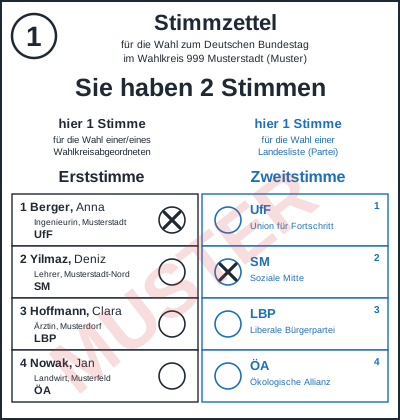
Welcher Stimmzettel wäre bei einer Bundestagswahl gültig? In Anlehnung an Bundeswahlordnung (BWO), Anlage 26 — 1
Aufgabe 131
In Germany, a mayor (Bürgermeisterin/Bürgermeister) is …Correct answer:the head of a municipality.
In Deutschland ist eine Bürgermeisterin/ein Bürgermeister … — das Oberhaupt einer Gemeinde.
Aufgabe 132
Many people in Germany work in an honorary capacity (ehrenamtlich) in their free time. What does this mean?Correct answer:They work voluntarily and unpaid in clubs and associations.
Viele Menschen in Deutschland arbeiten in ihrer Freizeit ehrenamtlich. Was bedeutet das? — Sie arbeiten freiwillig und unbezahlt in Vereinen und Verbänden.
Aufgabe 133
What is allowed in elections to the Bundestag and the state parliaments (Landtage) in Germany?Correct answer:You can cast your vote by post.
Was ist bei Bundestags- und Landtagswahlen in Deutschland erlaubt? — Man kann durch Briefwahl seine Stimme abgeben.
Aufgabe 134
They want to scrap the bus route that you always take to work. What can you do to keep the bus route?Correct answer:I join a citizens' initiative to keep the bus route, or I start an initiative myself.
Man will die Buslinie abschaffen, mit der Sie immer zur Arbeit fahren. Was können Sie machen, um die Buslinie zu erhalten? — Ich beteilige mich an einer Bürgerinitiative für die Erhaltung der Buslinie oder gründe selber eine Initiative.
Aufgabe 135
Whom do trade unions represent in Germany?Correct answer:employees
Wen vertreten die Gewerkschaften in Deutschland? — Arbeitnehmerinnen und Arbeitnehmer
Aufgabe 136
In Germany, you go to the labour court (Arbeitsgericht) in the case of …Correct answer:unjustified dismissal by your boss.
Sie gehen in Deutschland zum Arbeitsgericht bei … — ungerechtfertigter Kündigung durch Ihre Chefin/Ihren Chef.
Aufgabe 137
Which court in Germany is responsible for conflicts in the world of work?Correct answer:the labour court (Arbeitsgericht)
Welches Gericht ist in Deutschland bei Konflikten in der Arbeitswelt zuständig? — das Arbeitsgericht
Aufgabe 138
What can I do in Germany if my employer has dismissed me unfairly?Correct answer:file an action for protection against dismissal (Kündigungsschutzklage)
Was kann ich in Deutschland machen, wenn mir meine Arbeitgeberin/mein Arbeitgeber zu Unrecht gekündigt hat? — Kündigungsschutzklage erheben
Aufgabe 139
When does a trial in court take place in Germany? When someone …Correct answer:has committed a crime and is charged.
Wann kommt es in Deutschland zu einem Prozess vor Gericht? Wenn jemand … — eine Straftat begangen hat und angeklagt wird.
Aufgabe 140
What does a Schöffin/Schöffe do in Germany? He/she …Correct answer:decides on guilt and punishment together with judges.
Was macht eine Schöffin/ein Schöffe in Deutschland? Sie/Er … — entscheidet mit Richterinnen/Richtern über Schuld und Strafe.
Aufgabe 141
Who advises people on legal questions in Germany and represents them in court?Correct answer:a lawyer (Rechtsanwältin/Rechtsanwalt)
Wer berät in Deutschland Personen bei Rechtsfragen und vertritt sie vor Gericht? — eine Rechtsanwältin/ein Rechtsanwalt
Aufgabe 142
What is the main task of a judge in Germany? A judge …Correct answer:works at a court and passes judgments.
Was ist die Hauptaufgabe einer Richterin/eines Richters in Deutschland? Eine Richterin/ein Richter … — arbeitet an einem Gericht und spricht Urteile.
Aufgabe 143
A judge (Richterin/Richter) in Germany belongs to the …Correct answer:Judikative.
Eine Richterin/ein Richter in Deutschland gehört zur … — Judikative.
Aufgabe 144
In Germany, a judge belongs to the …Correct answer:judicial power (rechtsprechende Gewalt).
Eine Richterin/ein Richter gehört in Deutschland zur … — rechtsprechenden Gewalt.
Aufgabe 145
In Germany, state power is divided. For which branch of state power does a judge (Richterin/Richter) work? For the …Correct answer:Judikative
In Deutschland wird die Staatsgewalt geteilt. Für welche Staatsgewalt arbeitet eine Richterin/ein Richter? Für die … — Judikative
Aufgabe 146
In Germany, what do you call proceedings before a court?Correct answer:Prozess
Wie nennt man in Deutschland ein Verfahren vor einem Gericht? — Prozess
Aufgabe 147
What is the work of a judge in Germany?Correct answer:administering justice
Was ist die Arbeit einer Richterin/eines Richters in Deutschland? — Recht sprechen
Aufgabe 148
What is one task of the police in Germany?Correct answer:to make sure that laws are obeyed
Was ist eine Aufgabe der Polizei in Deutschland? — die Einhaltung von Gesetzen zu überwachen
Aufgabe 149
What is an example of antisemitic behaviour?Correct answer:denying the Holocaust
Was ist ein Beispiel für antisemitisches Verhalten? — den Holocaust leugnen
Aufgabe 150
A Gerichtsschöffin/Gerichtsschöffe in Germany is …Correct answer:a volunteer judge.
Eine Gerichtsschöffin/ein Gerichtsschöffe in Deutschland ist … — eine ehrenamtliche Richterin/ein ehrenamtlicher Richter.
Aufgabe 151
Aufgabe 152
When were the National Socialists with Adolf Hitler in power in Germany?Correct answer:1933 to 1945
Wann waren die Nationalsozialisten mit Adolf Hitler in Deutschland an der Macht? — 1933 bis 1945
Aufgabe 153
What happened on 8 May 1945?Correct answer:the end of the Second World War in Europe
Was war am 8. Mai 1945? — Ende des Zweiten Weltkriegs in Europa
Aufgabe 154
Aufgabe 155
When were the National Socialists in power in Germany?Correct answer:1933 to 1945
Wann waren die Nationalsozialisten in Deutschland an der Macht? — 1933 bis 1945
Aufgabe 156
In which year did Hitler become Reich Chancellor (Reichskanzler)?Correct answer:1933
In welchem Jahr wurde Hitler Reichskanzler? — 1933
Aufgabe 157
In 1933 the National Socialists with Adolf Hitler set up in Germany …Correct answer:a dictatorship.
Die Nationalsozialisten mit Adolf Hitler errichteten 1933 in Deutschland … — eine Diktatur.
Aufgabe 158
Aufgabe 159
What did not exist in Germany during the time of National Socialism?Correct answer:free elections
Was gab es in Deutschland nicht während der Zeit des Nationalsozialismus? — freie Wahlen
Aufgabe 160
Which war lasted from 1939 to 1945?Correct answer:the Second World War
Welcher Krieg dauerte von 1939 bis 1945? — der Zweite Weltkrieg
Aufgabe 161
What characterised the Nazi state? A policy of …Correct answer:state racism
Was kennzeichnete den NS-Staat? Eine Politik … — des staatlichen Rassismus
Aufgabe 162
Claus Schenk Graf von Stauffenberg became known for …Correct answer:the attempt on Hitler's life on 20 July 1944.
Claus Schenk Graf von Stauffenberg wurde bekannt durch … — das Attentat auf Hitler am 20. Juli 1944.
Aufgabe 163
In which year did the National Socialists destroy synagogues and Jewish shops in Germany?Correct answer:1938
In welchem Jahr zerstörten die Nationalsozialisten Synagogen und jüdische Geschäfte in Deutschland? — 1938
Aufgabe 164
What happened in Germany on 9 November 1938?Correct answer:Jewish shops and synagogues are destroyed by National Socialists and their supporters.
Was passierte am 9. November 1938 in Deutschland? — Jüdische Geschäfte und Synagogen werden durch Nationalsozialisten und ihre Anhänger zerstört.
Aufgabe 165
What was the name of the first Federal Chancellor of the Federal Republic of Germany?Correct answer:Konrad Adenauer
Wie hieß der erste Bundeskanzler der Bundesrepublik Deutschland? — Konrad Adenauer
Aufgabe 166
At which demonstrations in Germany did people shout “We are the people” (Wir sind das Volk)?Correct answer:at the Monday demonstrations in the GDR in 1989
Bei welchen Demonstrationen in Deutschland riefen die Menschen "Wir sind das Volk"? — bei den Montagsdemonstrationen 1989 in der DDR
Aufgabe 167
Which countries were called the “Allied occupying powers” in Germany after the Second World War?Correct answer:USA, Soviet Union, Great Britain, France
Welche Länder wurden nach dem Zweiten Weltkrieg in Deutschland als "Alliierte Besatzungsmächte" bezeichnet? — USA, Sowjetunion, Großbritannien, Frankreich
Aufgabe 168
Which country was not an “Allied occupying power” in Germany?Correct answer:Japan
Welches Land war keine "Alliierte Besatzungsmacht" in Deutschland? — Japan
Aufgabe 169
When was the Federal Republic of Germany founded?Correct answer:1949
Wann wurde die Bundesrepublik Deutschland gegründet? — 1949
Aufgabe 170
What existed in Germany during the time of National Socialism?Correct answer:the banning of parties
Was gab es während der Zeit des Nationalsozialismus in Deutschland? — das Verbot von Parteien
Aufgabe 171
Social market economy means that the economy …Correct answer:is guided by supply and demand, but the state ensures social balance.
Soziale Marktwirtschaft bedeutet, die Wirtschaft … — richtet sich nach Angebot und Nachfrage, aber der Staat sorgt für einen sozialen Ausgleich.
Aufgabe 172
In which occupation zone was the GDR founded? In the …Correct answer:Soviet occupation zone
In welcher Besatzungszone wurde die DDR gegründet? In der … — sowjetischen Besatzungszone
Aufgabe 173
The Federal Republic of Germany is a founding member of …Correct answer:the European Union (EU).
Die Bundesrepublik Deutschland ist ein Gründungsmitglied … — der Europäischen Union (EU).
Aufgabe 174
Aufgabe 175
How many occupation zones were there in Germany after the Second World War?Correct answer:4
Wie viele Besatzungszonen gab es in Deutschland nach dem Zweiten Weltkrieg? — 4
Aufgabe 176
How were Germany's occupation zones divided after 1945?Correct answer:1=Great Britain, 2=Soviet Union, 3=USA, 4=France
Wie waren die Besatzungszonen Deutschlands nach 1945 verteilt? — 1=Großbritannien, 2=Sowjetunion, 3=USA, 4=Frankreich
Aufgabe 177
Which German city was divided into four sectors after the Second World War?Correct answer:Berlin
Welche deutsche Stadt wurde nach dem Zweiten Weltkrieg in vier Sektoren aufgeteilt? — Berlin
Aufgabe 178
From June 1948 to May 1949, the people of West Berlin were supplied by an airlift. What was the reason for this?Correct answer:The Soviet Union cut off all traffic by land.
Vom Juni 1948 bis zum Mai 1949 wurden die Bürgerinnen und Bürger von West-Berlin durch eine Luftbrücke versorgt. Welcher Umstand war dafür verantwortlich? — Die Sowjetunion unterbrach den gesamten Verkehr auf dem Landwege.
Aufgabe 179
How did the Second World War officially end in Europe?Correct answer:through Germany's unconditional surrender
Wie endete der Zweite Weltkrieg in Europa offiziell? — durch die bedingungslose Kapitulation Deutschlands
Aufgabe 180
The first Federal Chancellor of the Federal Republic of Germany was …Correct answer:Konrad Adenauer.
Der erste Bundeskanzler der Bundesrepublik Deutschland war … — Konrad Adenauer.
Aufgabe 181
What did Willy Brandt want to express by kneeling down (Kniefall) in the former Jewish ghetto in Warsaw in 1970?Correct answer:He asked Poland and the Polish Jews for forgiveness.
Was wollte Willy Brandt mit seinem Kniefall 1970 im ehemaligen jüdischen Ghetto in Warschau ausdrücken? — Er bat Polen und die polnischen Juden um Vergebung.
Aufgabe 182
What is the Jewish house of prayer called?Correct answer:synagogue
Wie heißt das jüdische Gebetshaus? — Synagoge
Aufgabe 183
When was the “economic miracle” (Wirtschaftswunder) in the Federal Republic of Germany?Correct answer:the 1950s
Wann war in der Bundesrepublik Deutschland das "Wirtschaftswunder"? — 50er Jahre
Aufgabe 184
On what legal basis was the State of Israel founded?Correct answer:a resolution of the United Nations
Auf welcher rechtlichen Grundlage wurde der Staat Israel gegründet? — eine Resolution der Vereinten Nationen
Aufgabe 185
What did the term “Iron Curtain” stand for? For the sealing off …Correct answer:of the Warsaw Pact from the West
Wofür stand der Ausdruck "Eiserner Vorhang"? Für die Abschottung … — des Warschauer Pakts gegen den Westen
Aufgabe 186
In 1953 there was an uprising in the GDR, which for a long time was remembered with a public holiday in the Federal Republic of Germany. When was it?Correct answer:17 June
Im Jahr 1953 gab es in der DDR einen Aufstand, an den lange Zeit in der Bundesrepublik Deutschland ein Feiertag erinnerte. Wann war das? — 17. Juni
Aufgabe 187
Which German state had a black-red-gold flag with a hammer, a pair of compasses and a wreath of ears of grain?Correct answer:GDR (DDR)
Welcher deutsche Staat hatte eine schwarz-rot-goldene Flagge mit Hammer, Zirkel und Ährenkranz? — DDR
Aufgabe 188
In which year was the Wall in Berlin built?Correct answer:1961
In welchem Jahr wurde die Mauer in Berlin gebaut? — 1961
Aufgabe 189
When did the GDR build the Wall in Berlin?Correct answer:1961
Wann baute die DDR die Mauer in Berlin? — 1961
Aufgabe 190
What does the abbreviation DDR stand for?Correct answer:Deutsche Demokratische Republik (German Democratic Republic)
Was bedeutet die Abkürzung DDR? — Deutsche Demokratische Republik
Aufgabe 191
When was the Wall in Berlin opened for everyone?Correct answer:1989
Wann wurde die Mauer in Berlin für alle geöffnet? — 1989
Aufgabe 192
Which present-day German federal state used to be part of the territory of the GDR?Correct answer:Brandenburg
Welches heutige deutsche Bundesland gehörte früher zum Gebiet der DDR? — Brandenburg
Aufgabe 193
From 1961 to 1989, Berlin was …Correct answer:divided by a wall.
Von 1961 bis 1989 war Berlin … — durch eine Mauer geteilt.
Aufgabe 194
On 3 October, Germany celebrates the Day of German …Correct answer:Unity.
Am 3. Oktober feiert man in Deutschland den Tag der Deutschen … — Einheit.
Aufgabe 195
Which present-day German federal state used to be part of the territory of the GDR?Correct answer:Sachsen-Anhalt
Welches heutige deutsche Bundesland gehörte früher zum Gebiet der DDR? — Sachsen-Anhalt
Aufgabe 196
Why is the period in autumn 1989 in the GDR called “Die Wende” (the turning point)? During this time, the GDR changed politically …Correct answer:from a dictatorship to a democracy.
Warum nennt man die Zeit im Herbst 1989 in der DDR "Die Wende"? In dieser Zeit veränderte sich die DDR politisch … — von einer Diktatur zur Demokratie.
Aufgabe 197
Which present-day German federal state used to be part of the territory of the GDR?Correct answer:Thüringen
Welches heutige deutsche Bundesland gehörte früher zum Gebiet der DDR? — Thüringen
Aufgabe 198
Which present-day German federal state used to be part of the territory of the GDR?Correct answer:Sachsen
Welches heutige deutsche Bundesland gehörte früher zum Gebiet der DDR? — Sachsen
Aufgabe 199
In the GDR, the abbreviation “Stasi” meant …Correct answer:the Ministry for State Security.
Mit der Abkürzung "Stasi" meinte man in der DDR … — das Ministerium für Staatssicherheit.
Aufgabe 200
Which present-day German federal state used to be part of the territory of the GDR?Correct answer:Mecklenburg-Vorpommern
Welches heutige deutsche Bundesland gehörte früher zum Gebiet der DDR? — Mecklenburg-Vorpommern
Aufgabe 201
Which of the following lists contains only federal states that were part of the territory of the former GDR?Correct answer:Mecklenburg-Vorpommern, Brandenburg, Sachsen, Sachsen-Anhalt, Thüringen
Welche der folgenden Auflistungen enthält nur Bundesländer, die zum Gebiet der früheren DDR gehörten? — Mecklenburg-Vorpommern, Brandenburg, Sachsen, Sachsen-Anhalt, Thüringen
Aufgabe 202
Which side did the GDR belong to in the “Cold War”?Correct answer:the Warsaw Pact
Zu wem gehörte die DDR im "Kalten Krieg"? — zum Warschauer Pakt
Aufgabe 203
What was the economic system of the GDR called?Correct answer:planned economy
Wie hieß das Wirtschaftssystem der DDR? — Planwirtschaft
Aufgabe 204
How did the Federal Republic of Germany and the GDR become one state?Correct answer:Today's five eastern federal states joined the Federal Republic of Germany.
Wie wurden die Bundesrepublik Deutschland und die DDR zu einem Staat? — Die heutigen fünf östlichen Bundesländer sind der Bundesrepublik Deutschland beigetreten.
Aufgabe 205
With the accession of the GDR to the Federal Republic of Germany, the new federal states now also belong …Correct answer:to the European Union.
Mit dem Beitritt der DDR zur Bundesrepublik Deutschland gehören die neuen Bundesländer nun auch … — zur Europäischen Union.
Aufgabe 206
What do the so-called “Stolpersteine” (stumbling stones) in Germany commemorate?Correct answer:the victims of National Socialism
Woran erinnern die sogenannten „Stolpersteine“ in Deutschland? — an die Opfer des Nationalsozialismus
Aufgabe 207
Which military alliance was the GDR a member of?Correct answer:the Warsaw Pact
In welchem Militärbündnis war die DDR Mitglied? — im Warschauer Pakt
Aufgabe 208
What was the “Stasi”?Correct answer:the secret service of the GDR
Was war die "Stasi"? — der Geheimdienst der DDR
Aufgabe 209
Which was the coat of arms of the German Democratic Republic (Deutsche Demokratische Republik)?Correct answer:Picture 4
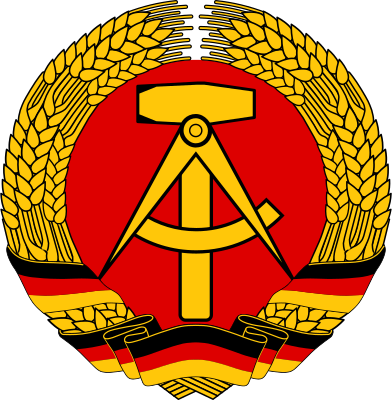
Welches war das Wappen der Deutschen Demokratischen Republik? — Bild 4
Aufgabe 210
What happened in the GDR on 17 June 1953?Correct answer:nationwide strikes and a popular uprising
Was ereignete sich am 17. Juni 1953 in der DDR? — landesweite Streiks und ein Volksaufstand
Aufgabe 211
Which politician is associated with the “Eastern Treaties” (Ostverträge)?Correct answer:Willy Brandt
Welcher Politiker steht für die "Ostverträge"? — Willy Brandt
Aufgabe 212
What is Germany's full name?Correct answer:Bundesrepublik Deutschland (Federal Republic of Germany)
Wie heißt Deutschland mit vollem Namen? — Bundesrepublik Deutschland
Aufgabe 213
How many inhabitants does Germany have?Correct answer:84 million
Wie viele Einwohner hat Deutschland? — 84 Millionen
Aufgabe 214
What are the colours of the German flag?Correct answer:black-red-gold
Welche Farben hat die deutsche Flagge? — schwarz-rot-gold
Aufgabe 215
Who is known as the “Chancellor of German Unity”?Correct answer:Helmut Kohl
Wer wird als "Kanzler der Deutschen Einheit" bezeichnet? — Helmut Kohl
Aufgabe 216
Which symbol can be seen in the plenary hall of the German Bundestag?Correct answer:the Federal Eagle
Welches Symbol ist im Plenarsaal des Deutschen Bundestages zu sehen? — der Bundesadler
Aufgabe 217
During which period did the German Democratic Republic (GDR) exist?Correct answer:1949 to 1990
In welchem Zeitraum gab es die Deutsche Demokratische Republik (DDR)? — 1949 bis 1990
Aufgabe 218
How many federal states joined the Federal Republic of Germany at reunification in 1990?Correct answer:5
Wie viele Bundesländer kamen bei der Wiedervereinigung 1990 zur Bundesrepublik Deutschland hinzu? — 5
Aufgabe 219
The Federal Republic of Germany has had its present-day borders since …Correct answer:1990
Die Bundesrepublik Deutschland hat die Grenzen von heute seit … — 1990
Aufgabe 220
27 January is an official day of remembrance in Germany. What does this day commemorate?Correct answer:the victims of National Socialism (the day of the liberation of the Auschwitz extermination camp)
Der 27. Januar ist in Deutschland ein offizieller Gedenktag. Woran erinnert dieser Tag? — an die Opfer des Nationalsozialismus (Tag der Befreiung des Vernichtungslagers Auschwitz)
Aufgabe 221
Germany is a member of the Schengen Agreement. What does this mean?Correct answer:Germans can travel to many countries in Europe without passport checks.
Deutschland ist Mitglied des Schengener Abkommens. Was bedeutet das? — Deutsche können in viele Länder Europas ohne Passkontrolle reisen.
Aufgabe 222
Which country is a neighbour of Germany?Correct answer:Switzerland
Welches Land ist ein Nachbarland von Deutschland? — Schweiz
Aufgabe 223
Which country is a neighbour of Germany?Correct answer:Poland
Welches Land ist ein Nachbarland von Deutschland? — Polen
Aufgabe 224
What does the abbreviation EU stand for?Correct answer:European Union (Europäische Union)
Was bedeutet die Abkürzung EU? — Europäische Union
Aufgabe 225
In which other country is there a large German-speaking population?Correct answer:Austria
In welchem anderen Land gibt es eine große deutschsprachige Bevölkerung? — Österreich
Aufgabe 226
Which is the flag of the European Union?Correct answer:Picture 2
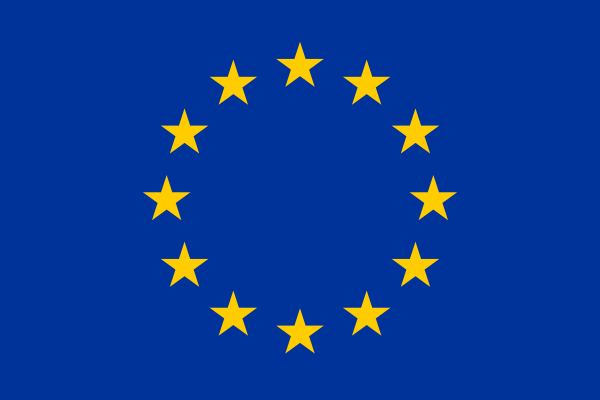
Welche ist die Flagge der Europäischen Union? — Bild 2
Aufgabe 227
Which country is a neighbour of Germany?Correct answer:Denmark
Welches Land ist ein Nachbarland von Deutschland? — Dänemark
Aufgabe 228
What is the GDR's accession to the Federal Republic of Germany in 1990 generally called?Correct answer:German reunification
Wie wird der Beitritt der DDR zur Bundesrepublik Deutschland im Jahr 1990 allgemein genannt? — Deutsche Wiedervereinigung
Aufgabe 229
Which country is a neighbour of Germany?Correct answer:Luxembourg
Welches Land ist ein Nachbarland von Deutschland? — Luxemburg
Aufgabe 230
The European Parliament is elected regularly, namely every …Correct answer:5 years.
Das Europäische Parlament wird regelmäßig gewählt, nämlich alle … — 5 Jahre.
Aufgabe 231
What does the term “European integration” mean?Correct answer:The term means European states uniting to form the EU.
Was bedeutet der Begriff "europäische Integration"? — Der Begriff meint den Zusammenschluss europäischer Staaten zur EU.
Aufgabe 232
Who is elected in the European election?Correct answer:the members of the European Parliament
Wer wird bei der Europawahl gewählt? — die Abgeordneten des Europäischen Parlaments
Aufgabe 233
Which country is a neighbour of Germany?Correct answer:Czech Republic
Welches Land ist ein Nachbarland von Deutschland? — Tschechien
Aufgabe 234
Where is one seat of the European Parliament?Correct answer:Strasbourg
Wo ist ein Sitz des Europäischen Parlaments? — Straßburg
Aufgabe 235
The then French President François Mitterrand and the then German Federal Chancellor Helmut Kohl together commemorate the dead of both world wars in Verdun. Which aim of the European Union does this meeting make clear?Correct answer:Peace and security in the EU countries
Der damalige französische Staatspräsident François Mitterrand und der damalige deutsche Bundeskanzler Helmut Kohl gedenken in Verdun gemeinsam der Toten beider Weltkriege. Welches Ziel der Europäischen Union wird bei diesem Treffen deutlich? — Frieden und Sicherheit in den Ländern der EU
Aufgabe 236
How many member states does the EU have today?Correct answer:27
Wie viele Mitgliedstaaten hat die EU heute? — 27
Aufgabe 237
In 2007 the 50th anniversary of the “Treaties of Rome” (Römische Verträge) was celebrated. What did the treaties contain?Correct answer:the founding of the European Economic Community (EEC)
2007 wurde das 50-jährige Jubiläum der "Römischen Verträge" gefeiert. Was war der Inhalt der Verträge? — Gründung der Europäischen Wirtschaftsgemeinschaft (EWG)
Aufgabe 238
In which places does the European Parliament work?Correct answer:Strasbourg, Luxembourg and Brussels
An welchen Orten arbeitet das Europäische Parlament? — Straßburg, Luxemburg und Brüssel
Aufgabe 239
Through which treaties did the Federal Republic of Germany join with other states to form the European Economic Community?Correct answer:through the “Treaties of Rome”
Durch welche Verträge schloss sich die Bundesrepublik Deutschland mit anderen Staaten zur Europäischen Wirtschaftsgemeinschaft zusammen? — durch die "Römischen Verträge"
Aufgabe 240
Since when have people in Germany paid in cash with the euro?Correct answer:2002
Seit wann bezahlt man in Deutschland mit dem Euro in bar? — 2002
Aufgabe 241
Ms Seger is having a baby. What must she do to receive parental allowance (Elterngeld)?Correct answer:She must submit an application to the parental allowance office.
Frau Seger bekommt ein Kind. Was muss sie tun, um Elterngeld zu erhalten? — Sie muss einen Antrag bei der Elterngeldstelle stellen.
Aufgabe 242
Who decides whether a child in Germany goes to kindergarten?Correct answer:the parents/legal guardians
Wer entscheidet, ob ein Kind in Deutschland in den Kindergarten geht? — die Eltern/die Erziehungsberechtigten
Aufgabe 243
Maik and Sybille want to hold a street demonstration with friends in the German town where they live. What must they do beforehand?Correct answer:They must register the demonstration.
Maik und Sybille wollen mit Freunden an ihrem deutschen Wohnort eine Demonstration auf der Straße abhalten. Was müssen sie vorher tun? — Sie müssen die Demonstration anmelden.
Aufgabe 244
Which school-leaving qualification do you normally need to start studying at a university in Germany?Correct answer:the Abitur (school-leaving examination)
Welchen Schulabschluss braucht man normalerweise, um an einer Universität in Deutschland ein Studium zu beginnen? — das Abitur
Aufgabe 245
Who is not allowed to live together as a couple in Germany?Correct answer:Anne (13 years old) and Tim (25 years old)
Wer darf in Deutschland nicht als Paar zusammenleben? — Anne (13 Jahre) und Tim (25 Jahre)
Aufgabe 246
At what age do you legally become an adult (volljährig) in Germany?Correct answer:18
Ab welchem Alter ist man in Deutschland volljährig? — 18
Aufgabe 247
A woman is pregnant. Shortly before and after the birth of her child, she is specially protected by law. What is this protection called?Correct answer:maternity protection (Mutterschutz)
Eine Frau ist schwanger. Sie ist kurz vor und nach der Geburt ihres Kindes vom Gesetz besonders beschützt. Wie heißt dieser Schutz? — Mutterschutz
Aufgabe 248
In Germany, bringing up children is mainly the task …Correct answer:of the parents.
Die Erziehung der Kinder ist in Deutschland vor allem Aufgabe … — der Eltern.
Aufgabe 249
Who is mainly responsible for bringing up children in Germany?Correct answer:the parents
Wer ist in Deutschland hauptsächlich verantwortlich für die Kindererziehung? — die Eltern
Aufgabe 250
In Germany you have the best chance of a well-paid job if you …Correct answer:are well qualified.
In Deutschland hat man die besten Chancen auf einen gut bezahlten Arbeitsplatz, wenn man … — gut ausgebildet ist.
Aufgabe 251
In Germany, if you hit a child, …Correct answer:you can be punished for it.
Wenn man in Deutschland ein Kind schlägt, … — kann man dafür bestraft werden.
Aufgabe 252
In Germany …Correct answer:you may only be married to one partner at a time.
In Deutschland … — darf man zur gleichen Zeit nur mit einer Partnerin/einem Partner verheiratet sein.
Aufgabe 253
Where must you register when you move house in Germany?Correct answer:at the residents' registration office (Einwohnermeldeamt)
Wo müssen Sie sich anmelden, wenn Sie in Deutschland umziehen? — beim Einwohnermeldeamt
Aufgabe 254
In Germany, married couples may get divorced. In most cases they must first observe the “year of separation” (Trennungsjahr). What does this mean?Correct answer:The spouses live their own lives separately for at least one year. After that, divorce is possible.
In Deutschland dürfen Ehepaare sich scheiden lassen. Meistens müssen sie dazu das "Trennungsjahr" einhalten. Was bedeutet das? — Die Ehegatten führen mindestens ein Jahr getrennt ihr eigenes Leben. Danach ist die Scheidung möglich.
Aufgabe 255
In Germany, parents who have problems bringing up their children can get help from the …Correct answer:youth welfare office (Jugendamt).
Bei Erziehungsproblemen können Eltern in Deutschland Hilfe erhalten vom … — Jugendamt.
Aufgabe 256
A married couple wants to open a restaurant in Germany. What do they definitely need for this?Correct answer:a restaurant licence from the responsible authority
Ein Ehepaar möchte in Deutschland ein Restaurant eröffnen. Was braucht es dazu unbedingt? — eine Gaststättenerlaubnis von der zuständigen Behörde
Aufgabe 257
An adult woman in Germany wants to get her Abitur later in life. She can do this at …Correct answer:an evening grammar school (Abendgymnasium).
Eine erwachsene Frau möchte in Deutschland das Abitur nachholen. Das kann sie an … — einem Abendgymnasium.
Aufgabe 258
What is the youth welfare office (Jugendamt) allowed to do in Germany?Correct answer:It can take a child who is beaten or has to go hungry out of the family.
Was darf das Jugendamt in Deutschland? — Es kann ein Kind, das geschlagen wird oder hungern muss, aus der Familie nehmen.
Aufgabe 259
The careers information centre BIZ (Berufsinformationszentrum) at the Federal Employment Agency in Germany helps with …Correct answer:looking for an apprenticeship.
Das Berufsinformationszentrum BIZ bei der Bundesagentur für Arbeit in Deutschland hilft bei der … — Lehrstellensuche.
Aufgabe 260
In Germany, a child at school has …Correct answer:a duty to attend.
In Deutschland hat ein Kind in der Schule … — Anwesenheitspflicht.
Aufgabe 261
A man aged 30 wants to get his Abitur later in Germany. Where can he do this? At …Correct answer:an evening grammar school (Abendgymnasium).
Ein Mann möchte mit 30 Jahren in Deutschland sein Abitur nachholen. Wo kann er das tun? An … — einem Abendgymnasium.
Aufgabe 262
What does the principle of equal treatment mean in Germany?Correct answer:Nobody may be disadvantaged, e.g. because of a disability.
Was bedeutet in Deutschland der Grundsatz der Gleichbehandlung? — Niemand darf z.B. wegen einer Behinderung benachteiligt werden.
Aufgabe 263
In Germany, young people aged 14 and over are criminally responsible (strafmündig). This means: young people who are 14 or older and break criminal laws …Correct answer:are punished.
In Deutschland sind Jugendliche ab 14 Jahren strafmündig. Das bedeutet: Jugendliche, die 14 Jahre und älter sind und gegen Strafgesetze verstoßen, … — werden bestraft.
Aufgabe 264
For which festival do people in Germany wear colourful costumes and masks?Correct answer:on Rose Monday (Rosenmontag)
Zu welchem Fest tragen Menschen in Deutschland bunte Kostüme und Masken? — am Rosenmontag
Aufgabe 265
Where must you go first in Germany if you want to get married?Correct answer:to the registry office (Standesamt)
Wohin muss man in Deutschland zuerst gehen, wenn man heiraten möchte? — zum Standesamt
Aufgabe 266
When does the legal night-time quiet period (Nachtruhe) begin in Germany?Correct answer:at 22:00, 10 p.m.
Wann beginnt die gesetzliche Nachtruhe in Deutschland? — um 22 Uhr
Aufgabe 267
A young woman in Germany, 22 years old, lives with her boyfriend. The woman's parents are not happy about this, because they do not like the boyfriend. What can the parents do?Correct answer:They must respect the decision of their adult daughter.
Eine junge Frau in Deutschland, 22 Jahre alt, lebt mit ihrem Freund zusammen. Die Eltern der Frau finden das nicht gut, weil ihnen der Freund nicht gefällt. Was können die Eltern tun? — Sie müssen die Entscheidung der volljährigen Tochter respektieren.
Aufgabe 268
A young woman wants to get her driving licence. She is afraid of the test because her mother tongue is not German. What is correct?Correct answer:She may be able to take the theory test in her mother tongue. There are more than ten languages to choose from.
Eine junge Frau will den Führerschein machen. Sie hat Angst vor der Prüfung, weil ihre Muttersprache nicht Deutsch ist. Was ist richtig? — Sie kann die Theorie-Prüfung vielleicht in ihrer Muttersprache machen. Es gibt mehr als zehn Sprachen zur Auswahl.
Aufgabe 269
In Germany, children from the age of three until they start school are entitled to …Correct answer:a kindergarten place.
In Deutschland haben Kinder ab dem Alter von drei Jahren bis zur Ersteinschulung einen Anspruch auf … — einen Kindergartenplatz.
Aufgabe 270
The Volkshochschule in Germany is an institution …Correct answer:for further education.
Die Volkshochschule in Deutschland ist eine Einrichtung … — zur Weiterbildung.
Aufgabe 271
What is a Christmas custom in Germany?Correct answer:decorating a fir tree
Was ist in Deutschland ein Brauch zu Weihnachten? — einen Tannenbaum schmücken
Aufgabe 272
Which way of living together is not allowed in Germany?Correct answer:A man is married to two women at the same time.
Welche Lebensform ist in Deutschland nicht erlaubt? — Ein Mann ist mit zwei Frauen zur selben Zeit verheiratet.
Aufgabe 273
If you have problems bringing up your children in Germany, you go …Correct answer:to the youth welfare office (Jugendamt).
Bei Erziehungsproblemen gehen Sie in Deutschland … — zum Jugendamt.
Aufgabe 274
In Germany you have deliberately opened a letter addressed to another person. What have you not respected?Correct answer:the secrecy of letters (Briefgeheimnis)
Sie haben in Deutschland absichtlich einen Brief geöffnet, der an eine andere Person adressiert ist. Was haben Sie nicht beachtet? — das Briefgeheimnis
Aufgabe 275
What do you need for a divorce in Germany?Correct answer:the support of a lawyer
Was braucht man in Deutschland für eine Ehescheidung? — die Unterstützung einer Anwältin/eines Anwalts
Aufgabe 276
What should you do if the person dealing with you at a German public authority treats you badly?Correct answer:I can complain to the head of the authority.
Was sollten Sie tun, wenn Sie von Ihrer Ansprechpartnerin/Ihrem Ansprechpartner in einer deutschen Behörde schlecht behandelt werden? — Ich kann mich bei der Behördenleiterin/beim Behördenleiter beschweren.
Aufgabe 277
A woman with a two-year-old child applies for a job in Germany. What is an example of discrimination? She does not get the job only because she …Correct answer:is a mother.
Eine Frau, die ein zweijähriges Kind hat, bewirbt sich in Deutschland um eine Stelle. Was ist ein Beispiel für Diskriminierung? Sie bekommt die Stelle nur deshalb nicht, weil sie … — Mutter ist.
Aufgabe 278
A man in a wheelchair has applied for a job as a bookkeeper. What is an example of discrimination? He does not get the job only because he …Correct answer:uses a wheelchair.
Ein Mann im Rollstuhl hat sich auf eine Stelle als Buchhalter beworben. Was ist ein Beispiel für Diskriminierung? Er bekommt die Stelle nur deshalb nicht, weil er … — im Rollstuhl sitzt.
Aufgabe 279
Most rented apartment buildings in Germany have “house rules” (Hausordnung). What is in such “house rules”? They list …Correct answer:rules that all residents must follow.
In den meisten Mietshäusern in Deutschland gibt es eine "Hausordnung". Was steht in einer solchen "Hausordnung"? Sie nennt … — Regeln, an die sich alle Bewohnerinnen und Bewohner halten müssen.
Aufgabe 280
If you want to challenge an incorrect tax assessment in Germany, you must …Correct answer:lodge an objection.
Wenn Sie sich in Deutschland gegen einen falschen Steuerbescheid wehren wollen, müssen Sie … — Einspruch einlegen.
Aufgabe 281
Two friends want to go into a public swimming pool in Germany. Both have dark skin and are not let in for that reason. Which right is being violated in this situation? The right to …Correct answer:equal treatment
Zwei Freunde wollen in ein öffentliches Schwimmbad in Deutschland. Beide haben eine dunkle Hautfarbe und werden deshalb nicht hineingelassen. Welches Recht wird in dieser Situation verletzt? Das Recht auf … — Gleichbehandlung
Aufgabe 282
Which honorary office (Ehrenamt) must German citizens take on if they are called upon to do so?Correct answer:election helper
Welches Ehrenamt müssen deutsche Staatsbürgerinnen und Staatsbürger übernehmen, wenn sie dazu aufgefordert werden? — Wahlhelferin/Wahlhelfer
Aufgabe 283
What do you do if you receive an incorrect bill from a German public authority?Correct answer:I lodge an objection with the authority.
Was tun Sie, wenn Sie eine falsche Rechnung von einer deutschen Behörde bekommen? — Ich lege Widerspruch bei der Behörde ein.
Aufgabe 284
What you need to be able to do for work will change very quickly in the future. What can you do?Correct answer:Adults must keep on learning, even after their training.
Was man für die Arbeit können muss, ändert sich in Zukunft sehr schnell. Was kann man tun? — Erwachsene müssen auch nach der Ausbildung immer weiter lernen.
Aufgabe 285
Ms Frost works in an office as a permanent employee. What does she not have to pay out of her salary?Correct answer:turnover tax
Frau Frost arbeitet als fest angestellte Mitarbeiterin in einem Büro. Was muss sie nicht von ihrem Gehalt bezahlen? — Umsatzsteuer
Aufgabe 286
Which body in a company helps employees with problems with their employer?Correct answer:the works council (Betriebsrat)
Welche Organisation in einer Firma hilft den Arbeitnehmerinnen und Arbeitnehmern bei Problemen mit der Arbeitgeberin/dem Arbeitgeber? — der Betriebsrat
Aufgabe 287
You want to end your employment with a company in Germany. What must you take into account?Correct answer:the period of notice
Sie möchten bei einer Firma in Deutschland ihr Arbeitsverhältnis beenden. Was müssen Sie beachten? — die Kündigungsfrist
Aufgabe 288
What is the basis of Germany's special responsibility for Israel?Correct answer:the National Socialist crimes against Jews
Woraus begründet sich Deutschlands besondere Verantwortung für Israel? — aus den nationalsozialistischen Verbrechen gegen Juden
Aufgabe 289
A man with dark skin applies for a job as a waiter in a restaurant in Germany. What is an example of discrimination? He does not get the job only because …Correct answer:he has dark skin.
Ein Mann mit dunkler Hautfarbe bewirbt sich um eine Stelle als Kellner in einem Restaurant in Deutschland. Was ist ein Beispiel für Diskriminierung? Er bekommt die Stelle nur deshalb nicht, weil … — er eine dunkle Haut hat.
Aufgabe 290
You have bought a television in Germany. At home you unpack the television, but it does not work. The television is broken. What can you do?Correct answer:make a complaint to the seller about the television
Sie haben in Deutschland einen Fernseher gekauft. Zu Hause packen Sie den Fernseher aus, doch er funktioniert nicht. Der Fernseher ist kaputt. Was können Sie machen? — den Fernseher reklamieren
Aufgabe 291
Why do you have to state on your tax return in Germany whether or not you belong to a church? Because …Correct answer:there is a church tax that is linked to income tax and wage tax.
Warum muss man in Deutschland bei der Steuererklärung aufschreiben, ob man zu einer Kirche gehört oder nicht? Weil … — es eine Kirchensteuer gibt, die an die Einkommen- und Lohnsteuer geknüpft ist.
Aufgabe 292
People in Germany live by the principle of religious tolerance. What does this mean?Correct answer:Everyone can believe what they want.
Die Menschen in Deutschland leben nach dem Grundsatz der religiösen Toleranz. Was bedeutet das? — Jeder kann glauben, was er möchte.
Aufgabe 293
What is an Easter custom in Germany?Correct answer:painting eggs
Was ist in Deutschland ein Brauch zu Ostern? — Eier bemalen
Aufgabe 294
Pentecost (Pfingsten) is …Correct answer:a Christian holiday.
Pfingsten ist ein … — christlicher Feiertag.
Aufgabe 295
Which religion has shaped European and German culture?Correct answer:Christianity
Welche Religion hat die europäische und deutsche Kultur geprägt? — das Christentum
Aufgabe 296
In Germany, the last four weeks before Christmas are called …Correct answer:Advent (Adventszeit).
In Deutschland nennt man die letzten vier Wochen vor Weihnachten … — die Adventszeit.
Aufgabe 297
From which country have most migrants come to Germany?Correct answer:Turkey
Aus welchem Land sind die meisten Migrantinnen und Migranten nach Deutschland gekommen? — Türkei
Aufgabe 298
The migrants who lived in the GDR came mainly from …Correct answer:Vietnam, Poland, Mozambique.
In der DDR lebten vor allem Migrantinnen und Migranten aus … — Vietnam, Polen, Mosambik.
Aufgabe 299
Foreign workers who were recruited by the Federal Republic of Germany in the 1950s and 1960s were called …Correct answer:guest workers (Gastarbeiterinnen/Gastarbeiter).
Ausländische Arbeitnehmerinnen und Arbeitnehmer, die in den 50er und 60er Jahren von der Bundesrepublik Deutschland angeworben wurden, nannte man … — Gastarbeiterinnen/Gastarbeiter.
Aufgabe 300
From which country did the first guest workers come to the Federal Republic of Germany?Correct answer:Italy
Aus welchem Land kamen die ersten Gastarbeiterinnen und Gastarbeiter in die Bundesrepublik Deutschland? — Italien
Questions about your federal state
- Baden-Württemberg10 questions
- Bayern10 questions
- Berlin10 questions
- Brandenburg10 questions
- Bremen10 questions
- Hamburg10 questions
- Hessen10 questions
- Mecklenburg-Vorpommern10 questions
- Niedersachsen10 questions
- Nordrhein-Westfalen10 questions
- Rheinland-Pfalz10 questions
- Saarland10 questions
- Sachsen10 questions
- Sachsen-Anhalt10 questions
- Schleswig-Holstein10 questions
- Thüringen10 questions
Source
Questions and options: Federal Office for Migration and Refugees (BAMF), Gesamtfragenkatalog for the “Leben in Deutschland” test and the Einbürgerungstest, as of 07.05.2025 (Annex 1 to the Einbürgerungstestverordnung). The English translation and the explanations are ours, written with AI; in the exam the questions are asked in German. The coats of arms, flags and photos come from Wikimedia Commons, the maps and ballot papers are drawn by us – authors and licences are listed under Image credits. This is not a government service.
Official informationTry it under exam conditions.
The same number of questions and the same pass mark as the real test, marked at once. Your first mock is free and needs no account.
The pass €7.99 · 180 days of access for one payment — it never renews